
Note from the Director, 2026-2027
Greetings!
We find ourselves here, again, at the beginning of another academic year to which we look with anticipation while we also chart a new path for the humanities amidst a landscape shaped by the powerful presence of artificial intelligence, public distrust in higher education, and the critical need to restore respectful civic discourse. As we embark on this year and set off on this path, the scholarly depth, critical nuance, and compassionate ethics of humanistic inquiry will be what centers us, sustains us, and sees us through. Here at the Kaplan Institute for the Humanities we see it as our great privilege to create as many opportunities as we can to support capacious and critical forms of scholarship, innovative and meaningful pedagogy, and a sense of shared purpose and community.
Indeed, community-building is central to Kaplan’s mission. We continue this year our monthly Third Thursday faculty gatherings, our weekly Friday morning writing retreats, and our funding for Scholarly Collectives. And we’re adding another initiative to the mix! To help strengthen our connections to our colleagues and collaborators in greater Chicagoland, we are launching a new Friends and Neighbors lecture fund. We aim to make it as easy as possible to welcome our close-by colleagues, our friends and neighbors, to engage with our campus community and to strengthen our inter-institutional connections and collaborations. And last, but not least, do keep an eye out for Kaplan’s own Little Free Library, debuting in our lobby this Fall, further encouraging you to stop in and say hello (and take or leave a book).
We are also excited to announce a sprawling new initiative, HumAIn: Being Human in the Age of AI, which aims to foster dynamic conversations, create intellectual communities, and inspire research and teaching that captures the very human hopes, fears, challenges, and opportunities for people, institutions, and communities in the age of AI. Forms of algorithmic technology touch numerous facets of our global society in ways that demand engagement from human-centered perspectives. What possibilities does this technological moment open to reimagine what it means to be human—not only in terms of limits or risks, but also in terms of creativity, responsibility, and collective futures? This initiative examines the broad, societal significance of how AI shapes human experience. Look out for a new book club, a conversation series, curriculum development opportunities, conferences, and keynotes from our own colleagues on campus pursuing this work in earnest.
We have an exciting Fall lineup of Kaplan Keynotes: On October 21, Professor Sianne Ngai (also a friend and a neighbor, from down the road at The University of Chicago) will offer a lecture on Scenes of Error. And if you caught Odyssey-fever this summer (or perhaps you’ve long had it), translator and scholar Daniel Mendelsohn will join us for a discussion of translation and the epic on November 16. And we cannot wait for the events surrounding our Fall Artists-in-Residence Martín Peña Vázquez and Yanet Gómez Gómez, co-founders of the Ecuador-based Teatro del Cielo, a company focused on dramatic corporeal mime!
And there is so much more planned throughout the year! This year is also the 10th anniversary of the Humanities in Translation (HiT!) Prize, a joint effort of Kaplan, the Roberta Buffett Institute for Global Affairs, and Northwestern University Press, so look out for even more events and initiatives around translation. We’ve got opportunities throughout the year to apply for Research Workshops, co-sponsorships, Faculty Fellowships, Franke Fellowships for graduate and undergraduate students, publishing workshops, Kaplan Scholars and Global Humanities Lab classes and more. We’ll keep you posted on all of it through your inbox, and you can (should) always follow us on Instagram (@KaplanHum).
See you soon!
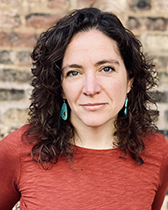
Professor of South Asian and Comparative Literature
Department of Asian Languages and Cultures and Program in Comparative Literary Studies