
Fall 2026 - Class Option #1
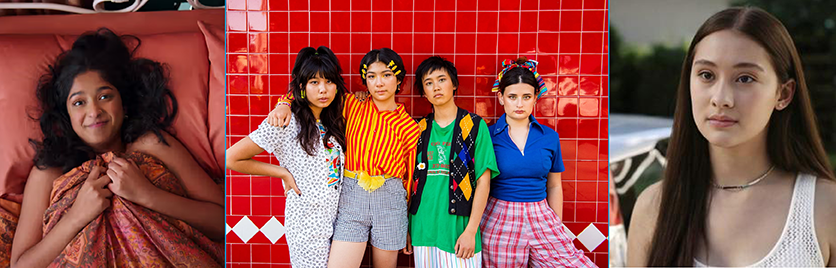
asian american girls
Small, cute, quiet? Asian American girls are made, not born. From The Summer I Turned Pretty’s Belly Conklin to Ali Wong’s Baby Cobra, Asian American girls and women are ironically gaining representational visibility in the same historical moment of the Atlanta shootings and a wave of gendered anti-Asian violence. Taking this disjunction as its entry point, this class will explore theories of race, gender, and sexuality through an intersectional approach centered on Asian American girls as subjects worthy of study. The course will employ a more contemporary definition of girlhood beyond “adolescence” and instead consider how the formation of girl culture occurs from early childhood through the late 20s, spanning several developmental eras. Drawing on theoretical approaches and research methods from anthropology and English, it will situate their figuration within histories of immigration, imperialism, and racialization in the United States and Asia. Topics covered will include activism and civic participation, beauty industries and influencers, education, food studies, Generation Z, heritage languages and cultures, media representations, the model minority stereotype, and sexual violence.
Students will engage with a range of scholarly and popular forms, including literary fiction, ethnographies, film, television, and social media. Over the course of the quarter, students will learn how to recognize the ways in which gender and race are embedded in aesthetic forms and cultural scripts, and study and describe how racial and gender ideology are shaped by American history and culture. Students will be asked to regularly journal about assigned texts as well as identify objects of analysis in their everyday lives. As small teams, they will be guided to undertake ethnographic and linguistic anthropological research about bilingualism and heritage among Asian American girls in the Chicagoland area. The class will also feature accessible and fun activities that invite students to explore art and culture related to the course topics, such as museum exhibit outings, movie screenings, comedy shows, and guest speakers.
Possible literary texts
Franny Choi, Soft Science
Jhumpa Lahiri, “When Mr. Pirzada Came to Dine”
Sally Wen Mao, Oculus
Sarah Thankam Matthews, All this Could Be Different
Chanel Miller, Know My Name
Shobha Rao, Indian Country
Emily Jungin Yoon, A Cruelty Special To Our Species
Michelle Zauner, Crying in H-Mart
C. Pam Zhang, How Much of These Hills is Gold
Jenny Zhang, Sour Heart
Possible critical texts
Leslie Bow, Racist Love: Asian Abstraction and the Pleasures of Fantasy
Summer Kim Lee, Spoiled: Asian American Hostility and the Damage of Repair
Sunaina Maira, Missing: Youth, Citizenship, and Empire after 9/11
erin Khuê Ninh, Ingratitude: The Debt-Bound Daughter in Asian American Literature
Angela Reyes, Language, Identity, and Stereotype among Southeast Asian American Youth
Thuy Linh Tu, Experiments in Skin: Race and Beauty in the Shadows of Vietnam
Sharon N. Tran, Asian Girlhood in the Shadows of US Empire
Possible media
Bisha K. Ali, producer, Ms. Marvel
Mindy Kaling, producer, Never Have I Ever
Mindy Kaling, producer, The Sex Lives of College Girls
Adele Lim, director, GirlsTrip
Smrithi Mundhra, producer, Indian Matchmaking
Smrithi Mundhra, producer, Muslim Matchmaker
Mira Nair, director, Mississippi Masala
Wayne Wang, director, Joy Luck Club
Jude Weng, director, ‘Ohana
Alice Wu, director, Saving Face
Instructors
Michelle N. Huang, Assistant Professor of English and Asian American Studies
Shalini Shankar, Professor of Anthropology and Asian American Studies
Both Professor Huang and Professor Shankar are recipients of Weinberg College Awards for Excellence in Teaching.