
2025-2026 Kaplan Scholars Courses
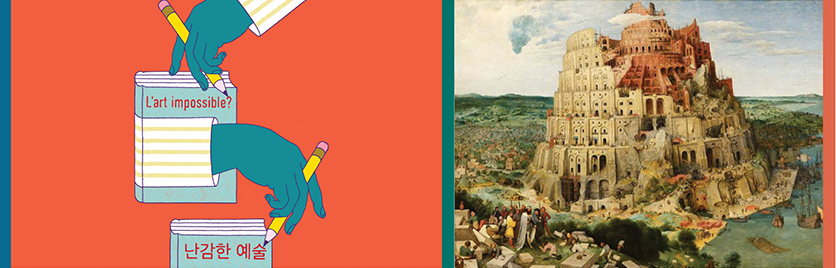
translating the World
“Without translation, we would be living in provinces bordering on silence.” – George Steiner
“Without translation, I would be limited to the borders of my own country. The translator is my most important ally. He introduces me to the world.” – Italo Calvino
“An act of translation is always an act of betrayal.” – R.F. Kuang
“The language of languages is translation.” – Ngugi Wa Thiong’o
The world is made of the stories we tell of it, of ourselves, and of each other. To translate, or to retell another’s story, in another language, form, or idiom, is at once an act of love and an act of violence. Translation gives us a window into ancient worlds. Empires are built on the backs of translations. Translations can also combat the fragmentation of the world into tribes and nations and point us back towards our common humanity. In this course we will explore the world-shaping force of translation as history, as practice, as art, as power, and as technology. How do translations, in the shape of retellings, continue to shape our understanding of the premodern world? Why was translation so central to the consolidation of power in the age of European colonialism? How have translations of sacred texts participated in and emerged from colonial encounters, and how have we inherited these complicated legacies? How might translation help us decolonize, and to build up an individual and collective politics built on empathy? Is translation gendered? What does a feminist translation practice look like? How is translation changing in the era of AI? Readings and discussions will range from ancient poems written by Indian Buddhist nuns in the centuries prior to the common era, to the Hindu epic the Ramayana, to contemporary speculative fiction. The class will also feature accessible and fun workshops and activities that invite students to explore the art and adventure of translation. Students are not required to have facility with any language other than English.
Sample texts
The Therigatha
The Ramayana
Buddhist scriptures about the Buddha’s mother Mahaprajapati and wife Yasodhara, together with modern translations
Babel, or The Necessity of Violence, R.F. Kuang
The Centre, Ayesha Manzoor Siddiqui
The Extinction of Irena Rey, Jennifer Croft
Translating Myself and Others, Jhumpa Lahiri
Is That a Fish in Your Ear? Translation and the Meaning of Everything, David Bellos
From Language to Language: the Hospitality of Translation, Souleymane Bachir Diagne
Essays by Lydia Davis, Italo Calvino, Ngugi Wa Thiong’o, Gayatri Spivak, and more.
Extracurricular activities around Chicago will include plays, museum visits, poetry and other literary readings, and performances, film screenings, and more.
Instructors
Laura Brueck, Professor of South Asian and Comparative Literature, and Director of the Kaplan Institute for the Humanities. A specialist in anti-caste literature from India, she translates from Hindi.
Sarah Jacoby, Professor of Religious Studies. A specialist in Tibetan Buddhism, she translates from Tibetan.

Gender, Trans, and All That Comes After
Gender, Trans, and All That Comes After invites students into a conversation about the history of gender and how gender organizes our world. We ask: what does it mean to say that gender is a construct? What is the gender binary? What is transgender? How long have transgender people been around? We address these questions through dialogues in the field of Gender and Trans Studies, the Black radical tradition, and Latin American perspectives, offering an intersectional approach to gender. In the first half of the course, we begin by exploring gender through popular uses of “trans” to broaden our definitions of the term. We will explore trans histories from multiple continents and historical periods, and we will consider how trans experiences can both embrace and challenge gender’s borders and beyond. Students will leave the course with a deeper understanding of the complex history of gender; what effect trans, nonbinary, and nonnormative identities have on our understanding of gender; and the importance of having an informed perspective on gender and its effects. This course is co-taught by two interdisciplinary scholars—Marquis Bey, professor of Black Studies and Gender Studies, and S. B. West, a professor of Latin American Literatures and Cultures and Gender Studies.
Sample texts/media
Black On Both Sides: A Racial History of Trans Identity, C. Riley Snorton
Transgender History, Susan Stryker
A Nonbinary Life, Marquis Bey
Autonomy and Abolition in Yucatán’s Caste War, S.B. West
“Evil Deceivers and Make Believers,” Talia Bettcher
Prospective field trips may include Defy Gravity’s Trans* Artists Circus Performance, Champaign, IL; Transgender Day of Remembrance Chicago Event; and others.
Instructors
Marquis Bey, Professor of Black Studies and Affiliate Faculty in Gender & Sexuality Studies.
S.B. [Esbi] West (they/them [English]; elle/ella, -a, -e [Spanish]), Associate Professor of Instruction in Gender & Sexuality Studies and is Affiliate Faculty in the Department of Spanish & Portuguese.